
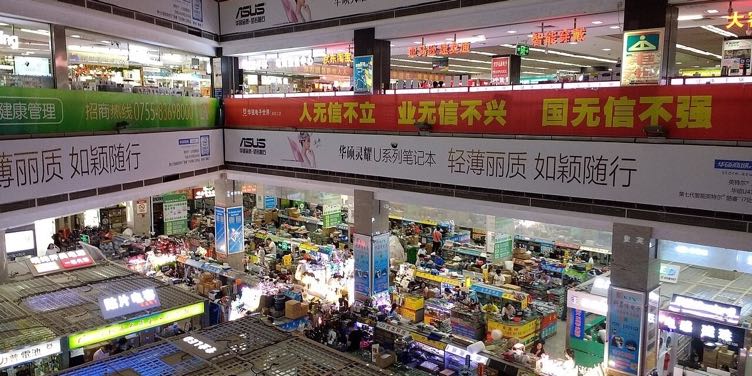
No. 19 Trade · Shenzhen, China
Who should test the world's electronics?
On 29 October 2026, the US Federal Communications Commission voted to stop recognising test laboratories in mainland China from December 2028. This report looks at how device testing works, why it became concentrated in China, and what Switzerland's own loss of mutual recognition with the European Union suggests about the costs.
Alessandro Montangero · 4 November 2026 · 13 min read
Key judgments
- From 1 December 2028, test reports from laboratories in mainland China will no longer count towards FCC equipment authorisation, unless China concludes a reciprocal recognition arrangement with the United States.
- Laboratories in mainland China tested 82 per cent of the devices that applied for FCC authorisation in 2025, and laboratories in the United States less than 4 per cent, so most testing for the US market will have to move.
- Most of it is likely to move to other Asian economies on the FCC's reciprocal list; a large return to the United States is less likely, because US laboratories charge more.
- The decision ties a technical service to trade policy, and its long-term effect depends on whether Washington and Beijing negotiate.
In numbers
In brief
Any device that emits radio frequency energy needs FCC authorisation before it can be sold in the United States, and the testing behind it is done by accredited private laboratories. On 29 October 2026 the FCC voted to recognise only laboratories in the United States and in economies with a reciprocal arrangement.
Testing has concentrated in southern China, close to where devices are assembled and at prices US laboratories cannot match. China argues that the rule breaches the WTO's non-discrimination clause; the FCC points to documented false test reports.
Switzerland's loss of mutual recognition with the EU for medical devices in 2021 shows how the recognition of tests can become a bargaining chip, with the costs falling on manufacturers.
Key terms
Conformity assessment
Any procedure used to determine that a product meets the requirements of technical regulations or standards, such as testing, inspection and certification, together with the accreditation of the bodies that carry them out. Before a device that emits radio frequency energy can be sold in the United States, an accredited laboratory tests it and a certification body issues the FCC authorisation.
WTO Agreement on Technical Barriers to Trade, Annex 1
FCC Federal Communications Commission
The independent US agency, created by the Communications Act of 1934, that regulates radio, television, wire, satellite and cable communications. Its equipment authorisation programme requires devices that emit radio frequency energy to be tested and certified before they are imported or marketed in the United States. In October 2026 it voted to stop recognising test laboratories in economies without a reciprocal arrangement with the United States, mainland China among them, from December 2028.
Federal Communications Commission
Mutual recognition agreement MRA
An agreement under which each party accepts the results of conformity assessment, such as test reports and certificates, issued by accredited bodies in the other's territory, so that a product tested once can be sold in both markets. Switzerland's agreement with the EU was not updated for medical devices when new EU rules took effect in May 2021, as the European Commission linked the update to the institutional agreement.
WTO Agreement on Technical Barriers to Trade, Article 6
TBT Agreement Agreement on Technical Barriers to Trade
The WTO agreement, in force since 1995, that aims to ensure that technical regulations, standards and conformity assessment procedures do not create unnecessary obstacles to trade. It requires that suppliers from other members be given access to conformity assessment on terms no less favourable than domestic suppliers or those of any other country, and encourages members to negotiate mutual recognition agreements.
WTO, Agreement on Technical Barriers to Trade
WTO World Trade Organization
The international organisation that administers the multilateral trade agreements, provides a forum for trade negotiations and settles disputes among its members. It was created on 1 January 1995 by the Marrakesh Agreement, which concluded the Uruguay Round, and is based in Geneva; it decides by consensus, which gives each member an effective veto.
Marrakesh Agreement Establishing the World Trade Organization
Rules of origin
The criteria that determine the national source of a product, used to decide which tariff, quota or trade preference applies to it. For goods made in several countries they usually rely on a change in tariff classification, a minimum share of local value added or specific processing steps; strict rules stop third countries from routing goods through a free trade partner.
WTO Agreement on Rules of Origin