
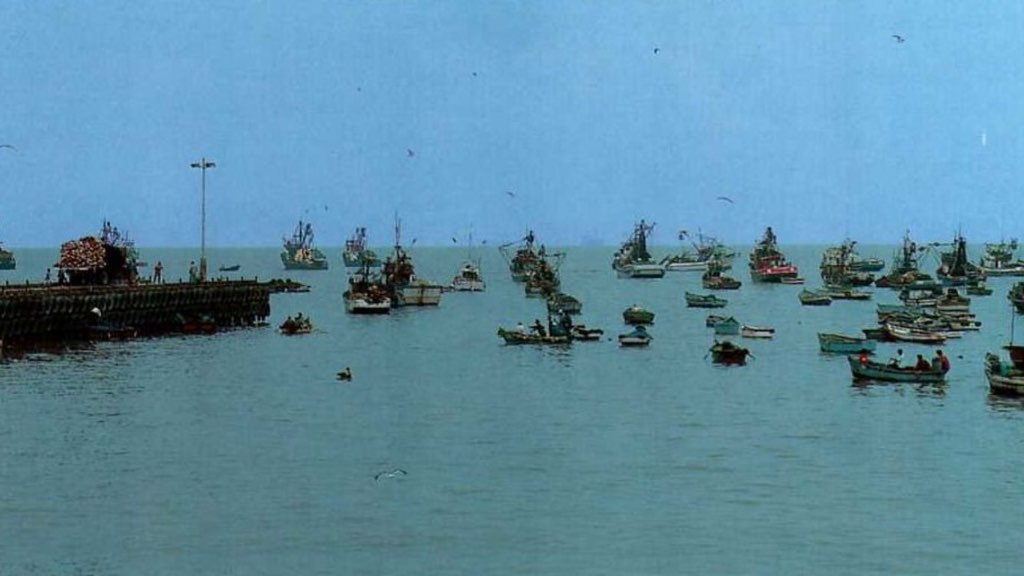
No. 21 Climate · Chimbote, Peru
El Niño and the price of protein, 1972 to 2026
A strong El Niño has closed Peru's second anchovy fishing season of 2026. The chain from Peru's fishery through fishmeal and animal feed to global protein markets, from the collapse of 1972 and 1973 to today, and what research says about El Niño and commodity prices.
Alessandro Montangero · 16 November 2026 · 11 min read
Key judgments
- NOAA put the chance that the current El Niño exceeds every event since 1950 at about 60 per cent for October to December, and expects a strong to very strong event to last into early 2027.
- Peru has cancelled its second anchovy fishing season of 2026; in the landings data since 2003, the lowest years were El Niño years.
- Peru supplies about a fifth of the world's fishmeal, most of it for aquaculture feed, so a weak year raises the cost of feed protein and adds demand for substitutes such as soybean meal.
- How much El Niño adds to food prices in 2026 cannot yet be measured. The episode of 1973 suggests that export restrictions can turn a weather shock into a larger price shock.
In numbers
In brief
In 1970 Peruvian boats landed 12.3 million tonnes of anchovy. Three years later, after heavy fishing and the strong El Niño of 1972 and 1973, the catch was 1.8 million tonnes; US soybean prices nearly tripled and Washington embargoed soybean exports from June to October 1973.
In October 2026 Peru's Ministry of Production cancelled the second anchovy season on the advice of the marine research institute IMARPE, which found that 79 per cent of the stock were juveniles. The anchovy is ground into fishmeal for farmed shrimp, salmon and young pigs, so the shortfall reaches protein markets far beyond Peru.
Research finds that El Niño shocks raise commodity prices and short-run inflation in most countries, and that strong events can depress income for years. The World Bank lists El Niño next to energy and fertiliser prices, so its own effect on 2026 food prices cannot yet be separated.