
No. 13 Technology · Baltic Sea
The Internet Lives on the Seabed
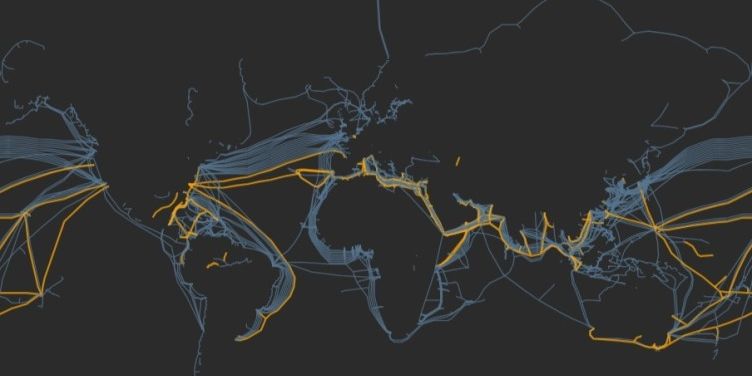
Almost all intercontinental data runs through a few hundred undersea cables, repaired by a small ageing fleet and protected by little law, seen through the anchor-dragging incidents in the Baltic and around Taiwan.
Nicolas Centorame · 17 September 2026 · 9 min read
Key points
- Most intercontinental data travels through a few hundred fibre-optic cables on the seabed, not by satellite.
- Around 200 cable faults occur each year, mostly by accident, and a small, ageing repair fleet is sized for accidents rather than for deliberate cuts.
- Since 2023 the Baltic Sea and the waters around Taiwan have each seen a cluster of cable incidents, many involving dragged anchors.
- The law of the sea offers little to stop or prosecute a ship suspected of cutting cables in international waters.
In numbers
In brief
Ownership of the network has shifted from consortia of national telecom companies to the large US technology firms, which now finance a growing share of new cables.
The report follows the Baltic incidents of 2024, including the Yi Peng 3 and the Eagle S, and the cuts around Taiwan and the Matsu Islands, and explains why sabotage by anchor is hard to prove.
States are responding with patrols such as NATO's Baltic Sentry and with ship-tracking systems, which the report treats as patches on a structural gap.
Key terms
Undersea cable
A fibre-optic cable laid on the seabed between landing stations on the coast; such cables carry almost all intercontinental data traffic. The UN Convention on the Law of the Sea requires states to make the wilful or culpably negligent breaking of a cable beneath the high seas a punishable offence.
UNCLOS, Article 113
Cable landing station
The coastal facility where an undersea cable comes ashore and connects to terrestrial networks, supplying power to the cable's repeaters and terminating its optical signals. Landing stations are clustered in a few places, such as Marseille or Fortaleza, which makes them points of concentrated risk for whole regions.
Cable repair ship
A specialised vessel that locates, lifts and splices damaged undersea cables, usually under regional maintenance agreements shared among cable owners. The world fleet is small and ageing, so repair after an anchor drag or earthquake can take weeks, and states increasingly count these ships as strategic assets.