
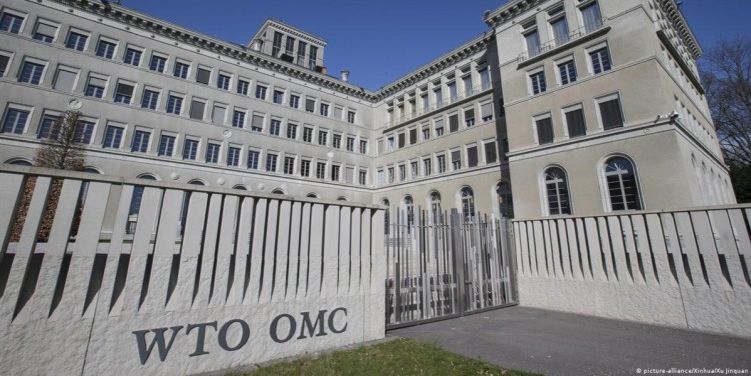
No. 8 Trade · Geneva, Switzerland
The Court That Quietly Stopped Working: How the World Lost Its Referee for Trade
The WTO's appeals court lost its quorum in December 2019 and its last member left in November 2020. How one member blocked new appointments, what 'appealing into the void' means, and the interim arrangement that dozens of members built without the United States.
Nicolas Centorame · 28 July 2026 · 9 min read
Key points
- The WTO's two-tier dispute system worked like a world court: rulings were adopted unless every member, the winner included, agreed to reject them.
- Since December 2019 its Appellate Body has had too few judges to hear appeals, because the United States has blocked new appointments across three administrations.
- A losing party can now appeal into the void and so avoid a binding ruling.
- About 60 members have built a substitute, the MPIA, but the United States and several other large economies stay outside it.
In numbers
In brief
Washington's case is substantive: it argues that the Appellate Body went beyond the treaty text, treated its rulings as precedent, missed deadlines and could not discipline China's state-led economy.
The MPIA uses arbitration under Article 25 of the dispute rules to recreate appellate review among its members, and has issued binding awards.
The report reads the empty bench as a sign of a wider drift from a trade order governed by rules towards one governed by leverage, which falls hardest on smaller trading economies.
Key terms
Appellate Body (WTO)
The standing body of seven members, set up in 1995 under the WTO Dispute Settlement Understanding, that hears appeals on questions of law in panel reports, with three members sitting on each appeal. Since it lost its quorum in December 2019, a panel report that is appealed cannot be adopted, which is known as <dfn id="appeal-into-the-void">appealing into the void</dfn>.
WTO, Dispute Settlement Understanding, Article 17
MPIA Multi-Party Interim Appeal Arbitration Arrangement
The Multi-Party Interim Appeal Arbitration Arrangement, under which participating WTO members agree to decide appeals among themselves by arbitration under Article 25 of the Dispute Settlement Understanding while the Appellate Body cannot hear them. It was notified to the WTO in April 2020; the United States does not take part.
WTO
WTO World Trade Organization
The international organisation that administers the multilateral trade agreements, provides a forum for trade negotiations and settles disputes among its members. It was created on 1 January 1995 by the Marrakesh Agreement, which concluded the Uruguay Round, and is based in Geneva; it decides by consensus, which gives each member an effective veto.
Marrakesh Agreement Establishing the World Trade Organization
Dispute Settlement Understanding Understanding on Rules and Procedures Governing the Settlement of Disputes
The WTO agreement that sets the procedure for trade disputes: consultations, then a panel of experts, an optional appeal to the Appellate Body, and authorised retaliation if a losing member does not comply. Reports are adopted unless the members decide by consensus to reject them, a rule known as negative consensus, which made the system close to automatic.
WTO