
No. 7 Commodities · Khouribga, Morocco
No Phosphate, No Food: The Kingdom That Feeds the World
Nitrogen comes from air and potassium from mines on every continent. Phosphorus cannot be synthesised, and about 70 per cent of the world's reserves lie under Morocco and occupied Western Sahara.
Nicolas Centorame · 14 July 2026 · 9 min read
Key points
- Of the three main plant nutrients, nitrogen can be made from air and potassium is spread across several countries; phosphorus has no substitute and cannot be synthesised.
- Morocco holds about two thirds of the world's phosphate rock reserves, through the state-owned OCP Group.
- Part of the production comes from Bou Craa in Western Sahara, where the EU's Court of Justice has ruled that trade agreements need the consent of the Sahrawi people.
- Fertiliser price spikes, above all in 2022, have passed into food prices and food insecurity worldwide.
In numbers
In brief
China is the largest producer of phosphate rock but holds modest reserves; Morocco is the second producer and the largest holder of reserves, which gives it weight for the rest of the century.
The report follows the court rulings of 2016 to 2024 on Western Sahara and the attempts to route trade around them, and the cadmium that sedimentary phosphate carries into soils.
It links the phosphate chokepoint to the energy chokepoint at Hormuz, since processing phosphate requires sulphuric acid made largely from Gulf sulphur.
Key terms
Phosphate rock
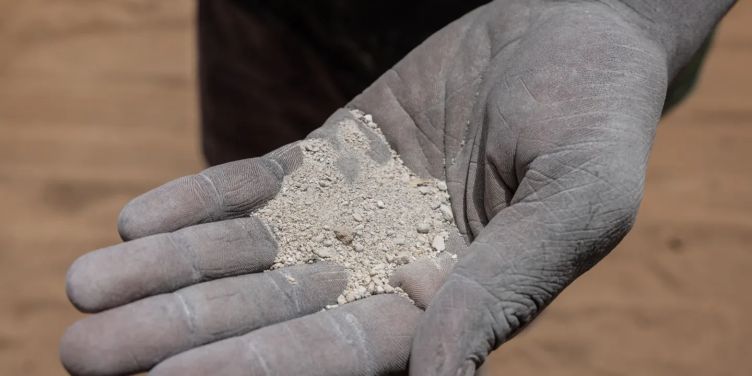
Rock with a high content of phosphate minerals, the main raw material for phosphorus fertilisers. Phosphorus has no substitute in agriculture.
USGS, Mineral Commodity Summaries
Western Sahara
A former Spanish colony on the Atlantic coast of north-west Africa, most of which Morocco has controlled since Spain withdrew in 1975 and 1976. The Polisario Front, which proclaimed the Sahrawi Arab Democratic Republic in 1976, disputes this; the United Nations lists the territory as non-self-governing. A UN mission, MINURSO, was deployed in 1991 to monitor a ceasefire, which the Polisario Front declared over in November 2020.
United Nations
NPK fertilisers
Fertilisers supplying nitrogen, phosphorus and potassium, the three main plant nutrients. Nitrogen is made from air and natural gas by the Haber-Bosch process, so its price follows gas; phosphorus comes from phosphate rock and potassium from potash, both mined in a small number of countries.
OCP Group Office Chérifien des Phosphates
The state-owned phosphate company of Morocco, founded in 1920 as the Office Chérifien des Phosphates, which mines the large deposits around Khouribga and is one of the largest producers of phosphate fertilisers. It also operates the Bou Craa mine in Western Sahara, a territory whose status is disputed.